Sparse voxel worlds and charted planet surfaces, built on
deterministic simulation and parallel-plane Vulkan
rendering. World data, detail levels, and the camera stay
separate.
World detail
10 cm cells · experimental 5 cm
Geometry
Voxels · ellipsoids · torus surfaces
Status
Playable slice + planet diagnostics
Private source · in development
05 / 06Neovim 0.10+ · dependency-free · private
Configuration owns effect
Control Center
Declarative sections keep settings, actions, keymaps, and
commands in one inspectable editor surface.
Boundary
Consumer API under proof
Mechanism
Registry projection
Evidence
Stale-action prevention
Private source · in development
06 / 06Neovim 0.9+ · colorscheme · private
Signal must stay scarce
Red Noir
True black ground, disciplined gray, and red reserved for
focus, diagnostics, and state change.
Boundary
Focused colorscheme
Mechanism
Stable read-only palette
Evidence
Editor + syntax coverage
Private / terminal dossier
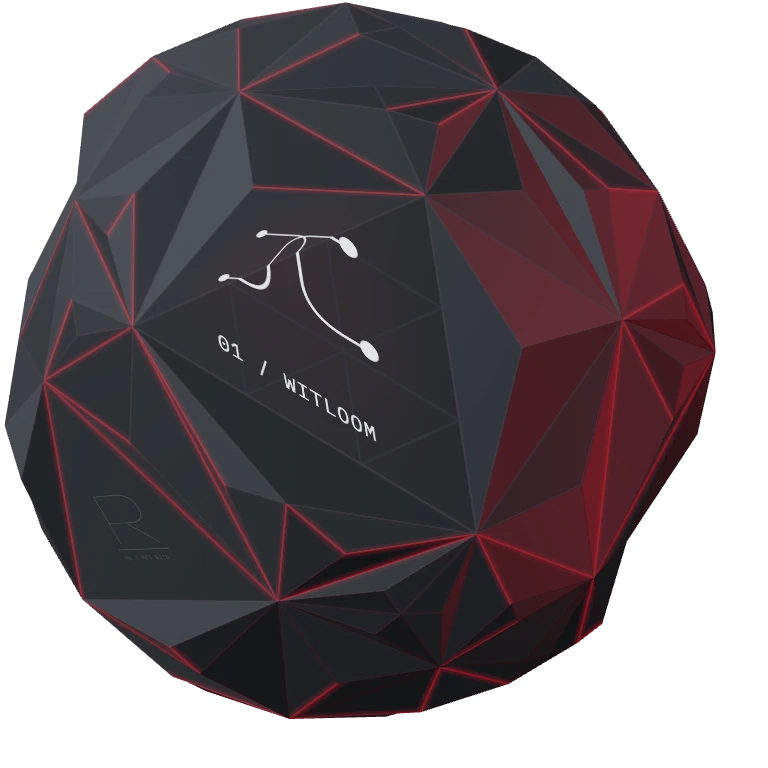
Project 01 / Agent protocols + durable execution
Powerful actors. Explicit rules.
Declared protocols for agents, tools, and people. Witloom admits
external signals, normalizes the next state, and preserves
execution for recovery and replay. Rust provides the local-first
reference runtime.
The scribe receives a bounded release order and can
return only the declared drafted letter.
draft --drafted→ approve
02 / 05 · Open authority
Authority is explicit and basis-bound.
The operator sees the declared decision packet and may
return proceed or
abort—nothing else.
approve --proceed→ review
03 / 05 · Declared branch
A veto closes the unsafe route.
The called council may emit vetoed. The
parent program routes it to a blocked terminal without a
model inventing recovery.
review --vetoed→ cancelled
04 / 05 · Composed quorum
Two letters can settle the council.
The council closes on two admitted ayes. Once closed,
late output cannot change the accepted result.
review --adopted→ shipped
05 / 05 · Durable terminal
Replay the accepted letter path.
The terminal revision, program basis, binding basis, and
semantic journal survive the agent session. Replay never
reinvokes effects.
shipped / revision 3 / replay exact
One program. Every outcome.
One semantic program.The route is not a prompt.
Actors return letters. The machine owns what
follows.
Protocol graph
α · alphaβ · betaγ · gamma2 ayes or an admitted veto close the council.
flagship.witl · Rust reference runtime
program flagship@1 where
  -- Composed release train: model draft, operator gate, reusable council.
  require review := "review.witl"

  schema order := shaped "release-order.v1" {"type":"object","required":["tag"],"properties":{"tag":{"type":"string"}},"additionalProperties":false}
  schema note := shaped "release-note.v1" {"type":"object","required":["notes"],"properties":{"notes":{"type":"string"}},"additionalProperties":false}
  adapter only-the-notes : note -> _ := pick "/notes"

  authority operator
  actor operator : authority operator
  actor scribe : managed never
  accepts order
  starts draft

  state draft where
    notes <- scribe : drafted note

  state approve where
    go <- operator : proceed order | abort order

  state review where
    call review

  state shipped := end released
  @[blocked] state cancelled := end cancelled

  next
  | draft, drafted   => approve using only-the-notes
  | approve, proceed => review
  | approve, abort   => cancelled
  | review, adopted  => shipped
  | review, vetoed   => cancelled
Review: inspect the quorum rule
program demo-review@1 where
  actor alpha : managed idempotent
  actor beta : managed idempotent
  actor gamma : managed idempotent
  starts vote

  state vote where
    alpha <- alpha : aye | vetoed
    beta  <- beta  : aye | vetoed
    gamma <- gamma : aye | vetoed
    close any_of
    | saying vetoed
    | at_least_saying 2 aye
    decide
    | saying vetoed => rejected
    | _             => approved
    carry := {
      ayes := count aye
      dissent := documents vetoed
    }

  state adopted := end adopted
  @[blocked] state refused := end vetoed

  next
  | vote, approved => adopted
  | vote, rejected => refused
Current state
draft
Selected transition
draft-drafted
Next state
approve
Validated
5 / 5 can terminate
Illustrative execution of the current flagship. Program source
and graph describe the same routes.
Tiger Libraries · spatial composition
One frame becomes many. Layout supplies the geometry; Score,
Scroll, and Motion bring the composition through space.
Input / 01
Onerectangle.
Start with an explicit viewport. Size, content, and
constraints drive geometry; scroll remains an explicit
presentation input.
viewport + content + constraints
Resolve / 02
Layout becomesdata.
Flow, padding, clipping, and transforms resolve into one
immutable snapshot with stable IDs.
same inputs → same snapshot
Signal / 03
Scroll is justanother input.
The page does not chase the scrollbar. It samples progress and
deterministically presents the matching state.
enter → hold → exit
Project / 04
One snapshot.Any renderer.
DOM and Three.js consume the same geometry. A custom renderer
can join without redefining layout.
DOM / Three.js / custom
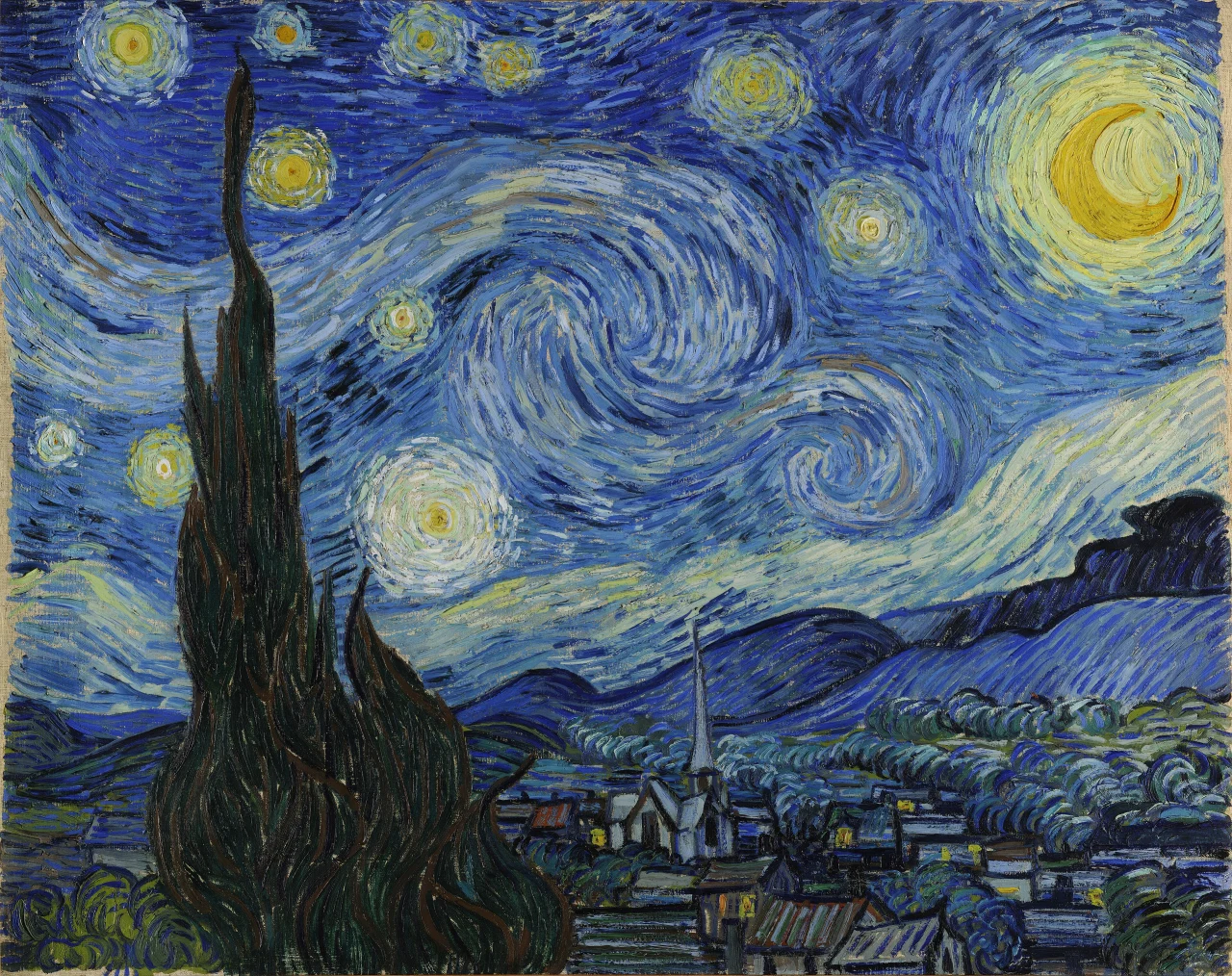
VINCENT VAN GOGH · 1889
The Starry Night
Stay a while. Scroll to continue.
When the painting is focused, Space pauses or plays; arrow keys
explore the detail view. Escape scrolls to the whole painting
and pauses.
Tiger Libraries · interaction lab
A system you can touch.
Move a tile. Change the space. Every piece finds its place.
Explore the same composition with a pointer or a keyboard.
Layout session
Ready — pointer or keyboard
01
Flow composition
row → column / gap 12
↕02
Motion patch
presentation only / geometry stable
↕03
Replay trace
same events / same snapshots
↕
Keyboard: focus a card, token, or divider; press
Space, use arrow keys, then Enter to commit or
Esc to cancel.